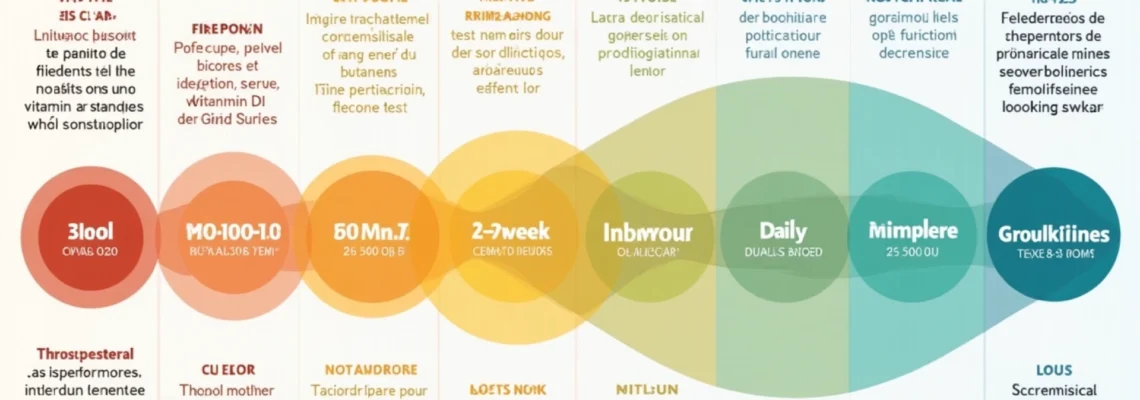
Vitamin D deficiency affects approximately 1 billion people worldwide, making it one of the most prevalent nutritional disorders globally. Understanding the recovery timeline from vitamin D deficiency is crucial for healthcare providers and patients alike, as this fat-soluble vitamin plays essential roles in bone health, immune function, and calcium absorption. The journey from deficiency to optimal vitamin D status involves multiple phases of biochemical restoration, symptom resolution, and careful monitoring protocols.
Recovery timelines vary significantly based on deficiency severity, treatment protocols, and individual patient factors. The process typically unfolds over several months , with initial improvements often visible within weeks of starting appropriate supplementation. However, achieving complete normalisation and maintaining optimal vitamin D status requires understanding the complex interplay between dosing strategies, absorption factors, and metabolic pathways involved in vitamin D metabolism.
Serum 25-hydroxyvitamin D3 baseline assessment and deficiency classification
Accurate assessment of vitamin D status begins with measuring serum 25-hydroxyvitamin D [25(OH)D] levels, the most reliable biomarker for determining vitamin D sufficiency. This metabolite reflects both dietary intake and endogenous production, providing healthcare professionals with essential baseline data for treatment planning. The classification system used for vitamin D status directly influences treatment protocols and expected recovery timeframes.
NHS laboratory reference ranges for 25(OH)D blood tests
The NHS employs specific reference ranges that guide clinical decision-making and treatment approaches. Laboratory values below 25 nmol/L indicate severe deficiency requiring immediate intervention, whilst levels between 25-50 nmol/L suggest moderate deficiency warranting structured supplementation protocols. Values ranging from 50-75 nmol/L represent insufficiency, where subtle symptoms may persist despite approaching normal ranges.
Optimal vitamin D status typically requires serum 25(OH)D levels above 75 nmol/L, though some experts advocate for higher thresholds of 100-125 nmol/L for maximum physiological benefits. These reference ranges directly correlate with recovery timelines , as patients with severe deficiency require more intensive treatment protocols and extended monitoring periods compared to those with mild insufficiency.
Severe deficiency below 25 nmol/l clinical presentations
Severe vitamin D deficiency manifests through pronounced clinical symptoms that significantly impact quality of life. Patients typically present with debilitating bone pain, particularly in the spine and pelvis, alongside muscle weakness that affects daily activities. Chronic fatigue becomes overwhelming, whilst increased susceptibility to respiratory infections indicates compromised immune function.
Additional presentations include dental problems, delayed wound healing, and mood disturbances ranging from depression to anxiety disorders. Children with severe deficiency may develop rickets, characterised by bone deformities and growth retardation. Recovery from severe deficiency typically requires 3-6 months of intensive supplementation to achieve therapeutic levels and symptom resolution.
Moderate deficiency 25-50 nmol/l symptom manifestations
Moderate vitamin D deficiency presents with subtler but persistent symptoms that often go unrecognised. Patients experience generalised fatigue that doesn’t improve with rest, intermittent muscle aches, and reduced bone density on screening tests. Hair loss may become noticeable, particularly in women, whilst cognitive function may decline with difficulty concentrating and memory problems.
Sleep quality frequently deteriorates, creating a cycle of fatigue and mood instability. Seasonal affective disorder symptoms become more pronounced during winter months when natural vitamin D synthesis decreases. Recovery from moderate deficiency typically spans 2-4 months with appropriate supplementation, though symptom improvement often begins within 4-6 weeks of treatment initiation.
Insufficiency 50-75 nmol/l subclinical indicators
Vitamin D insufficiency represents a grey area where subtle symptoms may persist despite laboratory values approaching normal ranges. Patients might experience occasional muscle cramps, mild fatigue during winter months, and slightly increased infection rates. Bone health markers may show minimal abnormalities, though long-term risks for osteoporosis remain elevated.
Recovery from insufficiency is typically the most straightforward, requiring 6-12 weeks of maintenance-dose supplementation to achieve optimal levels. However, ongoing monitoring remains crucial as these patients are most likely to experience recurrent deficiency without consistent supplementation or lifestyle modifications.
Therapeutic dosing protocols for vitamin D3 cholecalciferol supplementation
Effective vitamin D deficiency treatment requires carefully structured dosing protocols that balance rapid correction with safety considerations. Treatment strategies vary based on deficiency severity, patient factors, and clinical presentation. Understanding these protocols is essential for optimising recovery timelines whilst minimising potential adverse effects from excessive supplementation.
High-dose loading regimens: 20,000-50,000 IU weekly protocols
High-dose loading regimens provide rapid correction of severe vitamin D deficiency through weekly administration of substantial doses. The most common protocol involves 50,000 IU weekly for 6-8 weeks, followed by maintenance therapy. This approach rapidly saturates vitamin D stores whilst avoiding daily dosing compliance issues that often compromise treatment success.
Alternative loading strategies include 40,000 IU weekly for 7-8 weeks or 20,000 IU twice weekly for similar durations. These protocols typically achieve therapeutic levels within 8-12 weeks , making them ideal for patients with severe deficiency or those requiring rapid symptom resolution. However, careful monitoring ensures serum levels don’t exceed 375 nmol/L, which could indicate potential toxicity.
Loading dose protocols demonstrate superior efficacy compared to daily supplementation for rapidly correcting severe vitamin D deficiency, with most patients achieving therapeutic levels within 2-3 months of treatment initiation.
Maintenance therapy: 800-4,000 IU daily dosing strategies
Following successful loading therapy, maintenance dosing prevents recurrence whilst maintaining optimal vitamin D status. Daily doses typically range from 800-2,000 IU for most adults, though patients with malabsorption syndromes may require 3,000-4,000 IU daily. Individual dose adjustments depend on baseline levels, body weight, and absorption capacity.
Maintenance therapy becomes particularly crucial during winter months when natural vitamin D synthesis decreases significantly. Some patients benefit from seasonal dose adjustments, increasing daily intake by 50-100% during months with limited sunlight exposure. Regular monitoring every 3-6 months ensures maintained therapeutic levels without accumulation toward toxic ranges.
Prescription calcitriol and alfacalcidol treatment pathways
Certain clinical situations require active vitamin D metabolites rather than cholecalciferol supplementation. Calcitriol (1,25-dihydroxyvitamin D3) and alfacalcidol (1α-hydroxyvitamin D3) bypass hepatic and renal activation pathways, making them suitable for patients with chronic kidney disease or severe liver dysfunction. These medications require careful monitoring due to increased hypercalcemia risk.
Typical dosing ranges from 0.25-1.0 mcg daily for calcitriol, with dose adjustments based on serum calcium levels rather than 25(OH)D concentrations. Recovery timelines with active metabolites are often shorter , with symptom improvement noted within 2-4 weeks, though long-term safety requires vigilant calcium monitoring.
Intramuscular injection protocols for severe malabsorption cases
Patients with severe gastrointestinal malabsorption syndromes may require intramuscular vitamin D injections to achieve therapeutic levels. Common protocols include 300,000 IU given as a single injection, repeated every 3-6 months based on response. This approach bypasses intestinal absorption issues whilst providing sustained vitamin D release over several months.
Injectable vitamin D3 demonstrates particular effectiveness in patients with inflammatory bowel disease, celiac disease, or following bariatric surgery. Recovery timelines mirror those of high-dose oral protocols, with therapeutic levels achieved within 4-8 weeks post-injection. However, injection-site reactions and the need for medical administration limit widespread use to specific clinical scenarios.
Biochemical recovery phases and serum level normalisation timeframes
Vitamin D deficiency recovery follows predictable biochemical phases characterised by distinct serum concentration patterns and physiological responses. Understanding these phases helps healthcare providers set realistic expectations whilst optimising treatment protocols. The recovery process involves complex metabolic pathways that require time for complete restoration of vitamin D homeostasis.
Initial response phase: 2-4 week serum elevation patterns
The initial response phase begins within days of starting supplementation, though measurable serum changes typically appear after 2-3 weeks. During this period, serum 25(OH)D levels begin rising at rates of 1-2 nmol/L per day with high-dose protocols, whilst daily maintenance doses produce slower but steady increases. Individual variation in absorption and metabolism creates significant differences in response rates between patients.
Factors influencing initial response include baseline deficiency severity, gastrointestinal health, and concurrent medications. Patients with mild deficiency often show rapid initial improvement, whilst those with severe deficiency may demonstrate delayed responses due to depleted vitamin D stores requiring replenishment before serum levels rise substantially.
Intermediate recovery: 8-12 week therapeutic level achievement
The intermediate recovery phase typically spans weeks 4-12 of treatment, during which most patients achieve therapeutic serum levels above 50 nmol/L. This phase is characterised by steady serum elevation and the beginning of symptom resolution. High-dose loading protocols usually achieve therapeutic levels by week 8, whilst maintenance dosing may require 12-16 weeks for similar results.
During intermediate recovery, vitamin D binding protein saturation increases, improving vitamin D transport and tissue availability. Parathyroid hormone levels begin normalising as calcium homeostasis improves, though complete suppression may require several additional weeks. Patients often report initial symptom improvements during this phase, particularly reduced fatigue and improved mood stability.
Complete normalisation: 3-6 month optimal status restoration
Complete normalisation represents the achievement of optimal vitamin D status, typically defined as serum 25(OH)D levels above 75-100 nmol/L maintained for several weeks. This phase usually occurs 3-6 months after treatment initiation, depending on baseline deficiency severity and treatment protocol. Complete normalisation involves not just biochemical correction but full tissue saturation and metabolic optimisation.
During this final phase, vitamin D stores become fully replenished, providing buffering capacity against future deficiency. Tissue-specific vitamin D effects become fully manifest, including optimised immune function, improved calcium absorption, and enhanced bone mineralisation. Patients typically report maximum symptom resolution and improved overall well-being during complete normalisation.
Parathyroid hormone suppression and calcium homeostasis recovery
Parathyroid hormone (PTH) suppression serves as a crucial marker of successful vitamin D deficiency treatment. Elevated PTH levels, commonly seen in vitamin D deficiency, typically begin normalising within 4-6 weeks of adequate supplementation. Complete PTH normalisation may require 12-16 weeks, particularly in cases of severe deficiency where secondary hyperparathyroidism has developed.
Calcium homeostasis recovery follows PTH normalisation, with improved intestinal calcium absorption and reduced bone demineralisation. Serum calcium levels stabilise within normal ranges, though patients with concurrent calcium deficiency may require additional supplementation. The restoration of calcium homeostasis often correlates with significant improvement in bone pain and muscle weakness.
Parathyroid hormone normalisation typically occurs 2-4 weeks after achieving therapeutic vitamin D levels, serving as an excellent marker of successful treatment response and calcium homeostasis restoration.
Clinical symptom resolution timeline and functional improvements
Symptom resolution during vitamin D deficiency recovery follows variable timelines that don’t always correlate directly with serum level improvements. Understanding these patterns helps manage patient expectations whilst identifying treatment response markers. Functional improvements often begin before complete biochemical normalisation, providing early indicators of treatment success.
Fatigue typically shows initial improvement within 2-4 weeks of starting supplementation, though complete resolution may require 2-3 months. Muscle weakness often improves gradually over 6-12 weeks, with patients noting enhanced strength and endurance during daily activities. Bone pain, particularly in the spine and pelvis, usually begins resolving within 4-6 weeks, though complete relief may take several months.
Mood improvements frequently occur within 4-8 weeks, with patients reporting reduced depression scores and improved anxiety levels. Sleep quality often enhances earlier than other symptoms, sometimes within the first 2-3 weeks of treatment. Immune function improvements become apparent through reduced infection frequency over 3-6 months of treatment.
Cognitive improvements, including enhanced concentration and memory function, typically emerge during the intermediate recovery phase around weeks 6-12. Hair regrowth in patients experiencing vitamin D deficiency-related hair loss usually begins 8-12 weeks after treatment initiation, with significant improvement visible after 4-6 months. Dental health improvements require longer timeframes, often 6-12 months for noticeable changes in tooth sensitivity and gum health.
Monitoring requirements and Follow-Up testing protocols
Effective vitamin D deficiency management requires structured monitoring protocols that ensure treatment safety whilst optimising therapeutic outcomes. Monitoring strategies vary based on treatment intensity, patient risk factors, and baseline deficiency severity. Regular follow-up testing prevents both under-treatment and potential toxicity whilst allowing for protocol adjustments based on individual response patterns.
Initial monitoring typically involves baseline 25(OH)D measurement followed by repeat testing at 6-8 weeks after starting supplementation. This timeframe allows sufficient time for serum level changes whilst enabling early protocol adjustments if needed. Patients receiving high-dose loading therapy require more frequent monitoring, often at 4-week intervals during the intensive treatment phase.
Comprehensive monitoring includes serum 25(OH)D levels, parathyroid hormone, serum calcium, and phosphate levels. Alkaline phosphatase serves as an additional marker of bone metabolism recovery, whilst estimated glomerular filtration rate monitoring ensures kidney function preservation. Patients with concurrent conditions or those on multiple medications may require expanded monitoring protocols.
Long-term monitoring typically transitions to 3-6 monthly intervals once therapeutic levels are achieved and maintained. Annual monitoring may suffice for stable patients on maintenance therapy, though seasonal adjustments might necessitate more frequent assessments. Monitoring protocols should also include clinical symptom assessments, functional status evaluations, and quality of life measurements to ensure holistic treatment success.
| Treatment Phase | Monitoring Frequency | Key Parameters | Target Ranges |
|---|---|---|---|
| Loading Phase (0-12 weeks) | 4-6 weeks | 25(OH)D, PTH, Calcium | 25(OH)D: 50-125 nmol/L |
| Stabilisation (3-6 months) | 8-12 weeks | 25(OH)D, PTH, Symptoms | 25(OH)D: 75-125 nmol/L |
| Maintenance (6+ months) | 3-6 months | 25(OH)D, Clinical status | 25(OH)D: 75-125 nmol/L |
Factors influencing recovery rate and treatment efficacy variables
Multiple factors significantly influence vitamin D deficiency recovery rates, creating substantial individual variation in treatment response timelines. Understanding these variables enables healthcare providers to personalise treatment protocols whilst setting realistic recovery expectations. Patient-specific factors often prove more influential than deficiency severity in determining ultimate treatment success and recovery speed.
Age represents a crucial factor, with older adults typically demonstrating slower recovery rates due to decreased absorption capacity and altered vitamin D metabolism. Individuals over 65 years often require 25-50% longer recovery times compared to younger adults, necessitating extended treatment protocols and more frequent monitoring. Conversely, children and adolescents usually demonstrate rapid recovery with appropriate supplementation.
Body mass index significantly impacts both vitamin D metabolism and recovery tim
elines. Obesity significantly impacts vitamin D metabolism, as this fat-soluble vitamin becomes sequestered in adipose tissue, reducing bioavailability for physiological functions. Individuals with BMI >30 kg/m² typically require 2-3 times higher doses to achieve similar serum levels compared to normal-weight individuals, extending recovery timelines by 4-8 weeks.
Gastrointestinal health profoundly influences absorption rates and treatment efficacy. Patients with inflammatory bowel disease, celiac disease, or previous gastric bypass surgery demonstrate significantly impaired absorption, often requiring specialised protocols or intramuscular administration. Concurrent use of proton pump inhibitors or other medications affecting gastric pH can reduce vitamin D absorption by 20-30%.
Genetic polymorphisms in vitamin D binding protein, 25-hydroxylase, and vitamin D receptor genes create substantial individual variation in metabolism and tissue responsiveness. These genetic factors can extend recovery timelines by several weeks whilst requiring higher maintenance doses for sustained therapeutic levels. Skin pigmentation also influences endogenous synthesis capacity, with darker-skinned individuals requiring longer sun exposure or higher supplemental doses.
Seasonal factors significantly impact both deficiency development and recovery rates. Patients beginning treatment during winter months typically demonstrate slower initial response due to continued lack of UV-B exposure for endogenous synthesis. Geographic latitude affects baseline vitamin D status, with individuals living above 42°N demonstrating consistently lower levels and requiring more intensive treatment protocols.
Concurrent medical conditions substantially influence recovery patterns and treatment requirements. Chronic kidney disease impairs 1α-hydroxylase activity, reducing conversion to active calcitriol and necessitating longer treatment durations. Liver disease affects 25-hydroxylase function, potentially requiring active vitamin D metabolites rather than cholecalciferol supplementation. Malabsorption syndromes, including Crohn’s disease and short gut syndrome, often require parenteral administration or significantly higher oral doses.
Individual factors such as age, body mass index, genetic polymorphisms, and concurrent medications can extend vitamin D deficiency recovery timelines by 25-75%, highlighting the importance of personalised treatment protocols and realistic patient expectations.
Medication interactions represent another crucial variable affecting treatment efficacy. Corticosteroids increase vitamin D catabolism, requiring dose adjustments during concurrent therapy. Anticonvulsants induce hepatic enzymes that accelerate vitamin D metabolism, often necessitating 2-3 fold dose increases. Thiazide diuretics may enhance calcium absorption but can also affect vitamin D metabolism through complex renal mechanisms.
Lifestyle factors including diet, exercise, and sun exposure habits significantly influence both baseline status and recovery potential. Patients maintaining adequate dietary calcium intake demonstrate faster symptom resolution, particularly regarding bone pain and muscle weakness. Regular physical activity enhances vitamin D receptor expression and may accelerate functional improvements beyond serum level changes.
Compliance with treatment protocols remains perhaps the most critical factor determining recovery success. Patients using daily dosing regimens demonstrate variable adherence rates of 60-80%, whilst weekly high-dose protocols typically achieve 85-95% compliance. Poor adherence can extend recovery timelines indefinitely, whilst excellent compliance may accelerate recovery by 2-4 weeks compared to average expectations.
Patient expectations and understanding of treatment timelines also influence perceived recovery success. Those expecting immediate improvements may discontinue treatment prematurely, whilst patients with realistic expectations demonstrate better long-term adherence and sustained therapeutic outcomes. Healthcare provider communication regarding expected timelines significantly impacts treatment success rates and patient satisfaction with recovery progress.
Monitoring these influencing factors enables healthcare providers to optimise treatment protocols whilst managing patient expectations appropriately. Regular assessment of modifiable factors such as concurrent medications, dietary habits, and compliance patterns allows for protocol adjustments that can significantly improve recovery outcomes and reduce treatment duration for individual patients.